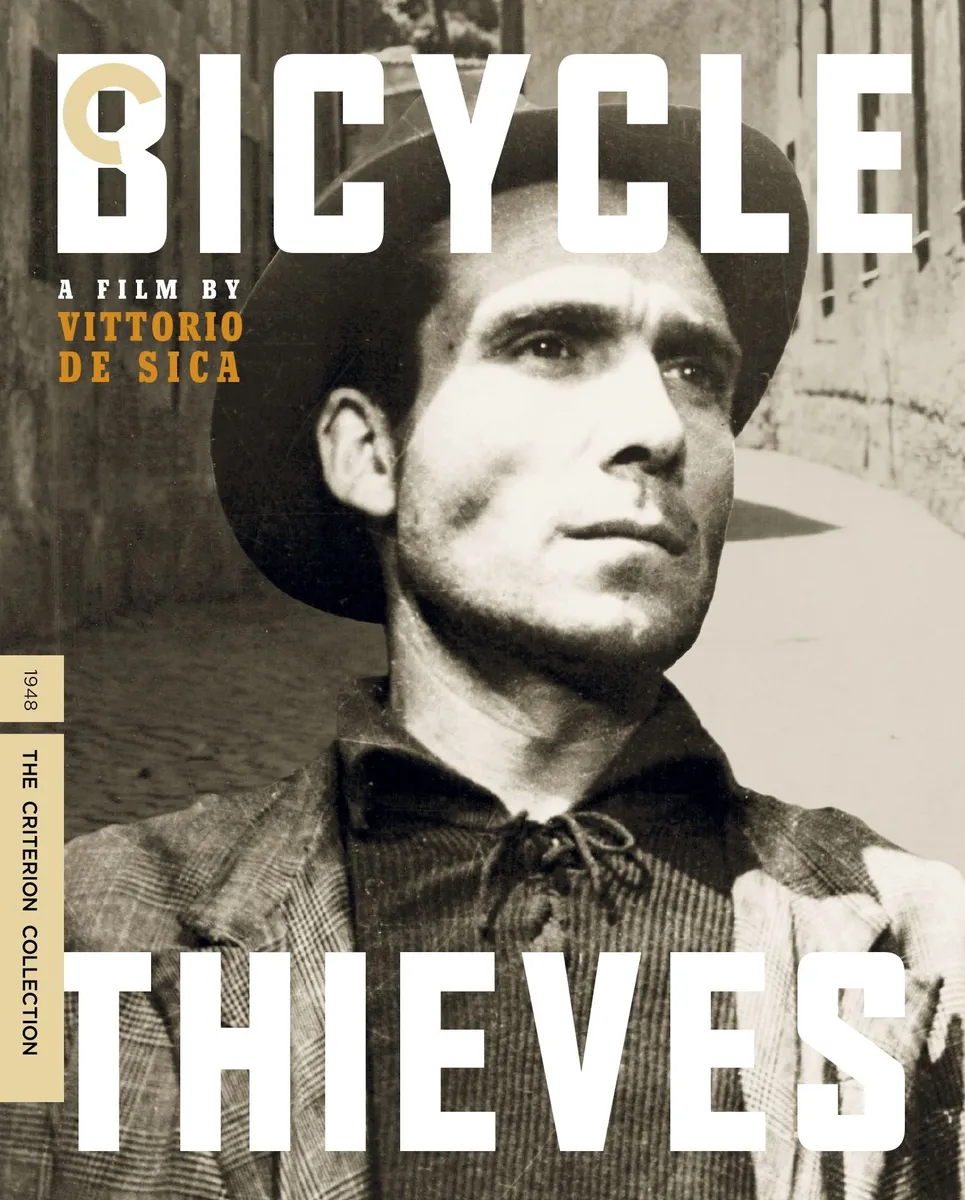
About this release
"This landmark Italian neorealist drama became one of the best-known and most widely acclaimed European movies, including a special Academy Award as ""most outstanding foreign film"" seven years before that Oscar category existed. Written primarily by neorealist pioneer Cesare Zavattini and directed by Vittorio DeSica, also one of the movement's main forces, the movie featured all the hallmarks of the neorealist style: a simple story about the lives of ordinary people, outdoor shooting and lighting, non-actors mixed together with actors, and a focus on social problems in the aftermath of World War II. Lamberto Maggiorani plays Antonio, an unemployed man who finds a coveted job that requires a bicycle. When it is stolen on his first day of work, Antonio and his young son Bruno (Enzo Staiola) begin a frantic search, learning valuable lessons along the way. The movie focuses on both the relationship between the father and the son and the larger framework of poverty and unemployment in postwar Italy. As in such other classic films as Shoeshine (1946), Umberto D. (1952), and his late masterpiece The Garden of the Finzi-Continis (1971), DeSica focuses on the ordinary details of ordinary lives as a way to dramatize wider social issues. As a result, The Bicycle Thief works as a sentimental study of a father and son, a historical document, a social statement, and a record of one of the century's most influential film movements."
Where to buy
As an Amazon Associate and eBay Partner Network member, FilmShelves earns from qualifying purchases. These links may earn us a commission at no extra cost to you.
Disc 1
UHD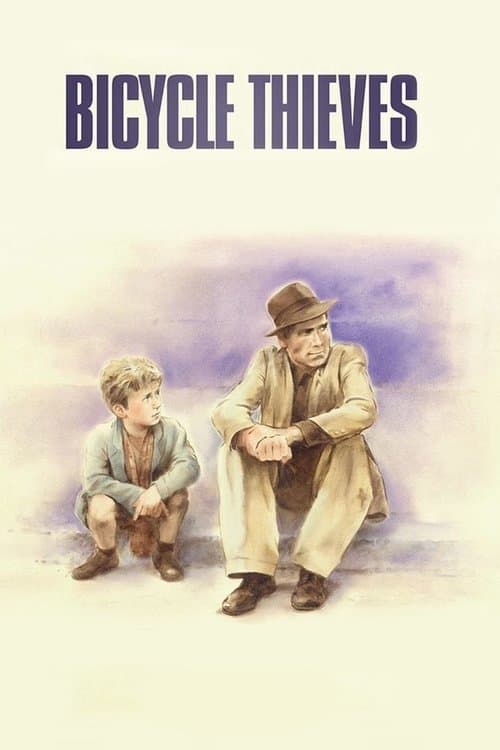
Bicycle Thieves (1948)
89 min
Drama
Unemployed Antonio is elated when he finally finds work hanging posters around war-torn Rome. However on his first day, his bicycle—essential to his work—gets stolen. His job is doomed unless he can find the thief. With the help of his son, Antonio combs the city, becoming desperate for justice.
Credits
Director
Vittorio De Sica
Writer
Adolfo Franci
Gherardo Gherardi
Cesare Zavattini
Oreste Biancoli
Suso Cecchi d'Amico
Vittorio De Sica
Gerardo Guerrieri
Cast
Lamberto Maggioranias Antonio
Enzo Staiolaas Bruno
Lianella Carellas Maria
Gino Saltamerendaas Baiocco
Vittorio Antonuccias Alfredo Catelli, The Thief
Giulio Chiarias The Beggar
Elena Altierias The Charitable Lady
Carlo Jachinoas A Beggar
Michele Sakaraas Secretary of the Charity Organization
Emma Druetti
Cinematographer
Carlo Montuori
Composer
Alessandro Cicognini
Editor
Eraldo Da Roma
Producer
Vittorio De Sica
Giuseppe Amato
Images
Release Details
- Packaging
- Blu-ray Case
Catalogue Info
- Added by
- Matthew Simpson
- Date added
- June 10, 2026