

About this release
"Hou Hsiao-hsien (Goodbye South, Goodbye) directed this Taiwanese-Japanese period drama set in the British section brothels of 19th-century Shanghai. Chu Tien-wen's screenplay was adapted from Han Ziyun's 1894 novel Haishang Huia Liezhuang (Biographies of Flowers of Shanghai), translated from the original dialect to Mandarin during the '30s by Shanghai writer Eileen Chang. Around 1884, during the closing years of Imperial China, Crimson (Japanese actress Michiko Hada) worries that she's about to be dropped by civil servant Wang (Tony Leung Chiu-wai), since he's spending so much time with Jasmin (Wei Hsiao-hui). Emotions escalate when word arrives that Wang will relocate to another post in the Canton province. Shown in competition at the 1998 Cannes Film Festival."
Where to buy
As an Amazon Associate and eBay Partner Network member, FilmShelves earns from qualifying purchases. These links may earn us a commission at no extra cost to you.
Disc 1
DVD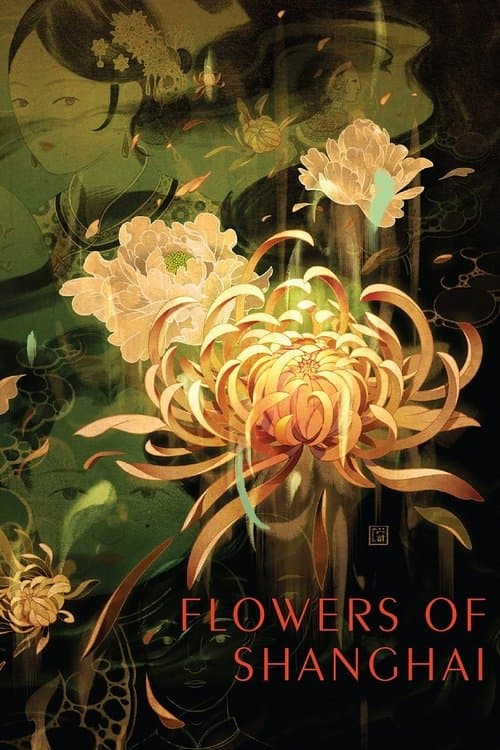
Flowers of Shanghai (1998)
113 min
Drama
At the end of the 19th century, Shanghai is divided into several foreign concessions. In the British concession, a number of luxurious “flower houses” are reserved for the male elite of the city. Since Chinese dignitaries are not allowed to frequent brothels, these establishments are the only ones that these men can visit. They form a self-contained world, with its own rites, traditions and even its own language. The men don’t only visit the houses to frequent the courtesans but also to dine, smoke opium, play mahjong and relax. The women working there are known as the “flowers of Shanghai”.
Credits
Director
Hou Hsiao-hsien
Writer
Chu Tien-Wen
Cast
Tony Leung Chiu-waias Wang
Michiko Hadaas Crimson
Carina Lauas Pearl
Michele Reisas Emerald
Jack Kaoas Luo
Rebecca Panas Huang
Stephanie Fong Shuanas Jade
Annie Shizuka Inohas Golden Flower
Vicky Weias Jasmin
Firebird Liuas Vagabond #2
Cinematographer
Mark Lee Ping-Bing
Composer
Yoshihiro Hanno
Tu Duu-chih
Editor
Liao Ching-sung
Producer
Yang Teng-Kuei
Shôzô Ichiyama
Images
Release Details
- Packaging
- Keep Case
Catalogue Info
- Added by
- Matthew Simpson
- Date added
- June 15, 2026