
About this release
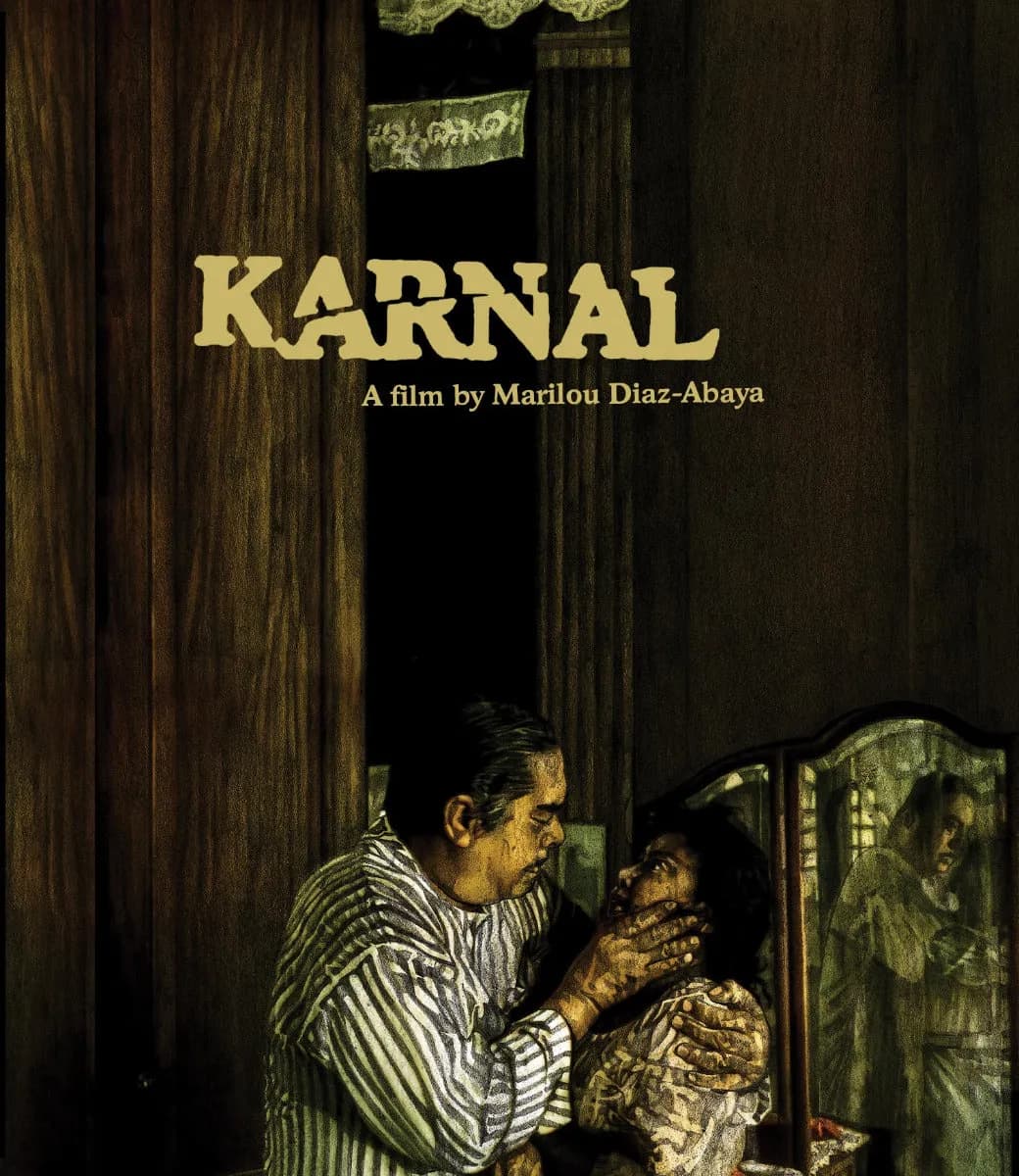
A fork in the road brings Narcing (Phillip Salvador) back to his hometown of Mulawin, rumored to be located not so far from Hell. Freshly married, he arrives from Manila in the hopes of introducing his wife Puring (Cecille Castillo) to his relatives. Gusting (Vic Silayan), the family’s domineering patriarch, does not welcome the couple kindly. Still scarred by the suicide of wife, Gusting immediately resents his son for what he perceives as a betrayal: the loss of land-owning heritage to the vulgarity of city women. Spite mingles with jealousy, turning to something altogether more sinister when Narcing’s behavior begins mirroring that of his father who, in turn, begins noticing Puring’s uncanny resemblance to his wife. Following Brutal (1980) and Moral (1982), Marilou Diaz-Abaya closes her informal feminist trilogy with Karnal, a striking example of Filipino Gothic set in the 1930s. Inspired by a sordid true crime story, what begins as archetypal Filipino melodrama soon turns to horror: a Village of the Damned-inspired study of the places that turn people into monsters and of the cruel, feudalistic patriarchy that continues to have deadly repercussions for Philippines politics today. The latter is embodied brilliantly by Vic Silayan, on the heels of a similar, monstrous turn as a tyrannical father in Kisapmata (1981). -2K restoration -Interview with Joel Torre -Interview with Ricky Lee -Booklet with new writing by Jason Tan Liwag
Where to buy
As an Amazon Associate and eBay Partner Network member, FilmShelves earns from qualifying purchases. These links may earn us a commission at no extra cost to you.
Disc 1
BD
Of the Flesh (1983)
123 min
HorrorDrama
When Narcing brings home his wife Puring to their hometown Mulawin in the 1930s, it sets off a series of events that include parricide, infidelity, betrayal, guilt and redemption.
Credits
Director
Marilou Diaz-Abaya
Writer
Ricky Lee
Cast
Charito Solisas Storyteller
Phillip Salvadoras Narcing
Vic Silayanas Gusting
Cecille Castilloas Puring
Joel Torreas Goryo
Grace Amilbangsaas Doray
Pen Medinaas Menardo
Joonee Gamboaas Pekto
Rolando Tinioas Bino
Ella Luansingas Suling
Cinematographer
Manolo R. Abaya
Editor
Marc Tarnate
Producer
Ben Yalung
Release Details
- Packaging
- Blu-ray Case
Images
Catalogue Info
- Added by
- Matthew Simpson
- Date added
- August 10, 2026