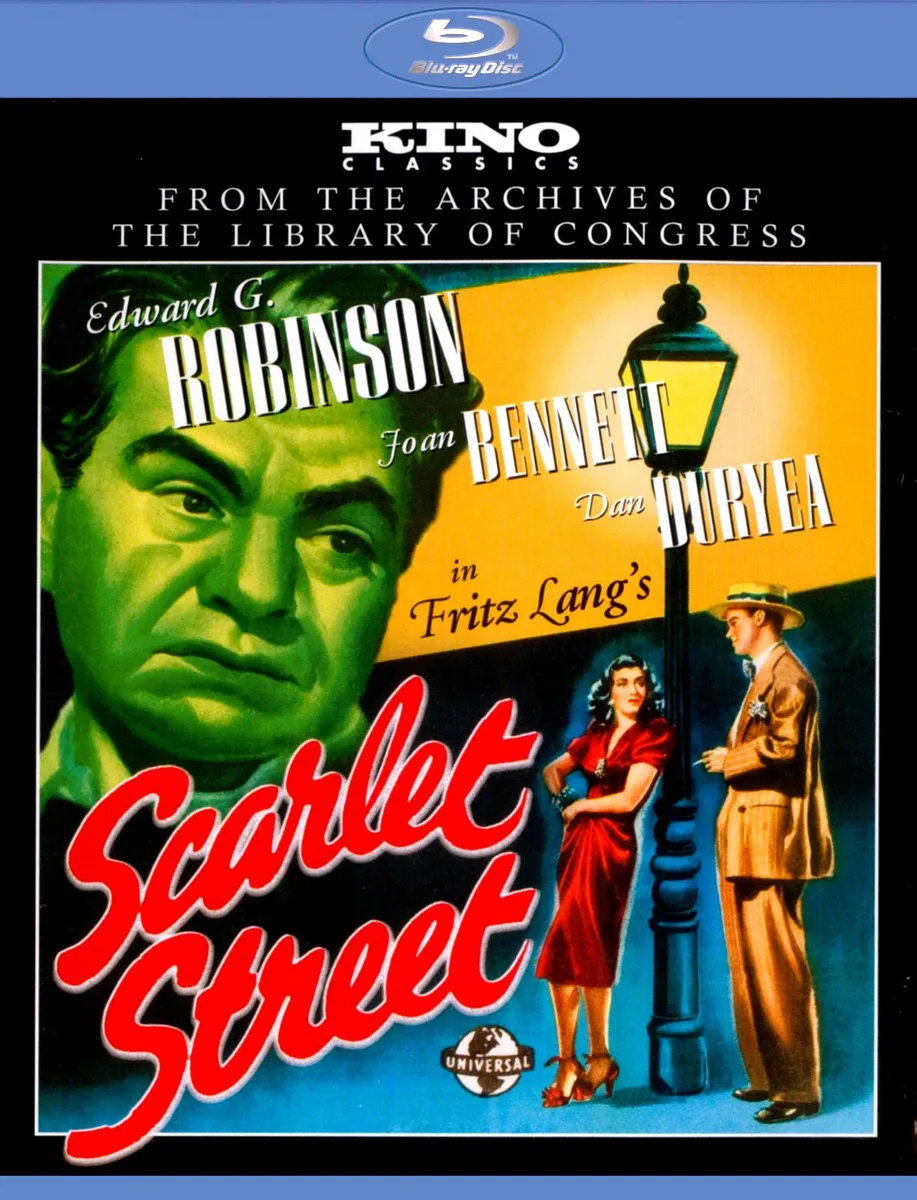
About this release
Masterfully directed by Fritz Lang, Scarlet Street is a bleak film in which an ordinary man succumbs first to vice and then to murder. Christopher Cross (Edward G. Robinson) is a lonely man married to a nagging wife. Painting is the only thing that brings him joy. Cross meets Kitty (Joan Bennett) who, believing him to be a famous painter, begins an affair with him. Encouraged by her lover, con man Johnny Prince (Dan Duryea) Kitty persuades Cross to embezzle money from his employer in order to pay for her lavish apartment. In that apartment, happy for the first time in his life, Cross paints Kitty's picture. Johnny then pretends that Kitty painted to portrait, which has won great critical acclaim. Finally realizing he has been manipulated, Cross kills Kitty, loses his job, and because his name has been stolen by Kitty, is unable to paint. He suffers a mental breakdown as the film ends, haunted by guilt. Kitty and Johnny are two of the most amoral and casual villains in the history of film noir, both like predatory animals completely without conscience. Milton Krasner's photography is excellent in its use of stark black-and-white to convey psychological states. Fritz Lang is unparalleled in his ability to convey the desperation of hapless, naïve victims in a cruelly realistic world.
Where to buy
As an Amazon Associate and eBay Partner Network member, FilmShelves earns from qualifying purchases. These links may earn us a commission at no extra cost to you.
Disc 1
BD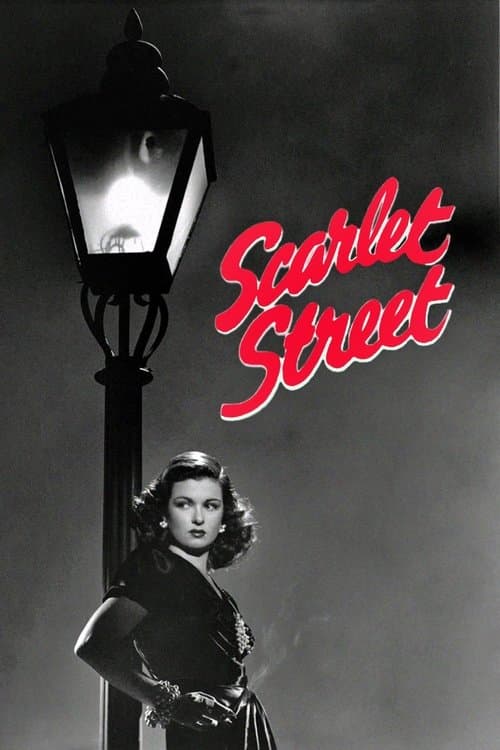
Scarlet Street (1945)
103 min
CrimeDrama
Cashier and part-time starving artist Christopher Cross is absolutely smitten with the beautiful Kitty March. Kitty plays along, but she's really only interested in Johnny, a two-bit crook. When Kitty and Johnny find out that art dealers are interested in Chris's work, they con him into letting Kitty take credit for the paintings. Cross allows it because he is in love with Kitty, but his love will only let her get away with so much.
Credits
Director
Fritz Lang
Writer
Dudley Nichols
Cast
Edward G. Robinsonas Christopher Cross
Joan Bennettas Katherine 'Kitty' March
Dan Duryeaas Johnny Prince
Margaret Lindsayas Millie Ray
Jess Barkeras David Janeway
Rosalind Ivanas Adele Cross
Charles Kemperas Homer Higgins
Anita Sharp-Bolsteras Laura Michaels
Samuel S. Hindsas Charles Pringle
Vladimir Sokoloffas Pop LeJon
Cinematographer
Milton Krasner
Composer
Hans J. Salter
Editor
Arthur Hilton
Producer
Fritz Lang
Release Details
- Packaging
- Blu-ray Case
Images
Catalogue Info
- Added by
- Matthew Simpson
- Date added
- June 23, 2026