
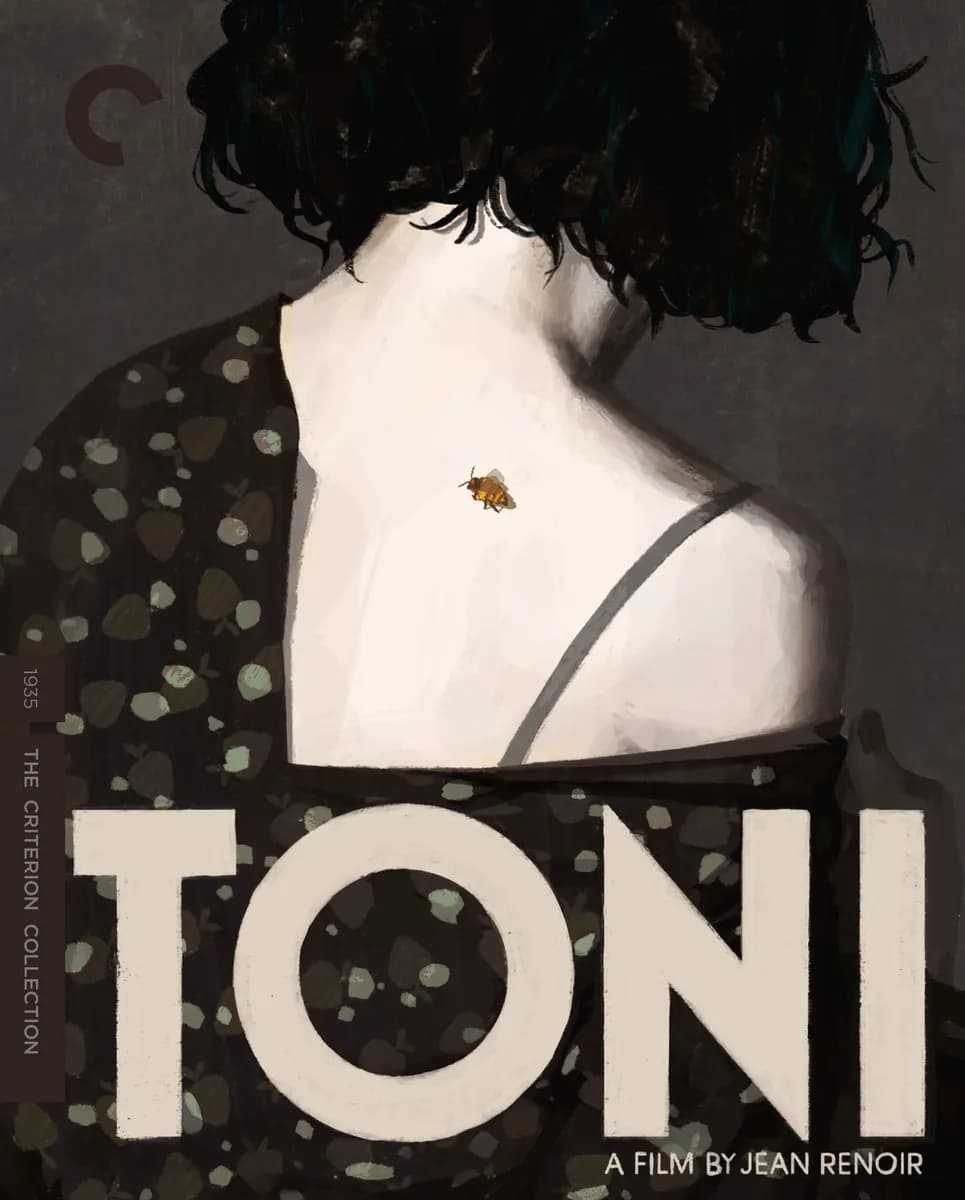
About this release
"After completing his successful Madame Bovary (34), director Jean Renoir could have had the pick of France's top ""name"" actors for his 1935 film Toni, but chose instead to use nonprofessionals. The plot was based on a true story, brought to Renoir's attention by the sheriff of the village where it occurred. The story is the basic ""good man destroyed by bad woman"" conceit: An Italian laborer sets the gears in motion for Zola-esque tragedy by falling in love with a young woman, who then marries his foreman. This terse triangle is given verisimilitude by the unknown players and the location filming at the actual village where the real-life incident took place; what could have been relentlessly grim material is imbued with warmth and sentiment by Renoir. Taken for granted upon its initial release, Toni was obviously a major influence in the Italian Neorealist movement of the 1940s; the Renoir film finally and permanently secured classic status in the auteur-conscious 1960s."
Where to buy
As an Amazon Associate and eBay Partner Network member, FilmShelves earns from qualifying purchases. These links may earn us a commission at no extra cost to you.
Disc 1
BD
Toni (1935)
84 min
DramaRomance
In the 1920s, the Provence is a magnet for immigrants seeking work in the quarries or in the agriculture. Many mingle with locals and settle down for good — like Toni, an Italian who has moved in with Marie, a Frenchwoman. Even a well-ordered existence is not immune from boredom, friendship, romance, or enmity, and Toni becomes entangled in a web of increasingly passionate relationships. For there is his best pal Fernand, but also Albert, his overbearing foreman; there is Sebastian, a steady Spanish peasant, but also Gabi, his young rogue relative; there is Marie, but there is also Josefa.
Credits
Director
Jean Renoir
Writer
Jean Renoir
Carl Einstein
Cast
Charles Blavetteas Antonio Canova dit « Toni »
Celia Montalvánas Josépha
Jenny Héliaas Marie
Max Dalbanas Albert
Andrexas Gaby
Édouard Delmontas Fernand
Michel Kovachevitchas Sébastian
Paul Bozzias Jacques, le guitariste
Vincent Florioas Un enfant de choeur (uncredited)
Jacques Levertas Police Commissioner (uncredited)
Cinematographer
Claude Renoir
Composer
Paul Bozzi
Editor
Marguerite Renoir
Suzanne de Troeye
Producer
Marcel Pagnol
Images
Release Details
- Packaging
- Keep Case
Catalogue Info
- Added by
- Matthew Simpson
- Date added
- June 8, 2026